Whether you're working a solo tow on a dark highway shoulder or managing a fleet of DOT vehicles across three counties, there's an OVERWATCH configuration built for exactly your scenario. Every one deploys fast, runs autonomously, and fires a 125 dB alarm before a vehicle reaches your crew.
Your driver is alone on the shoulder at 1 AM. This is what goes in the truck bed.
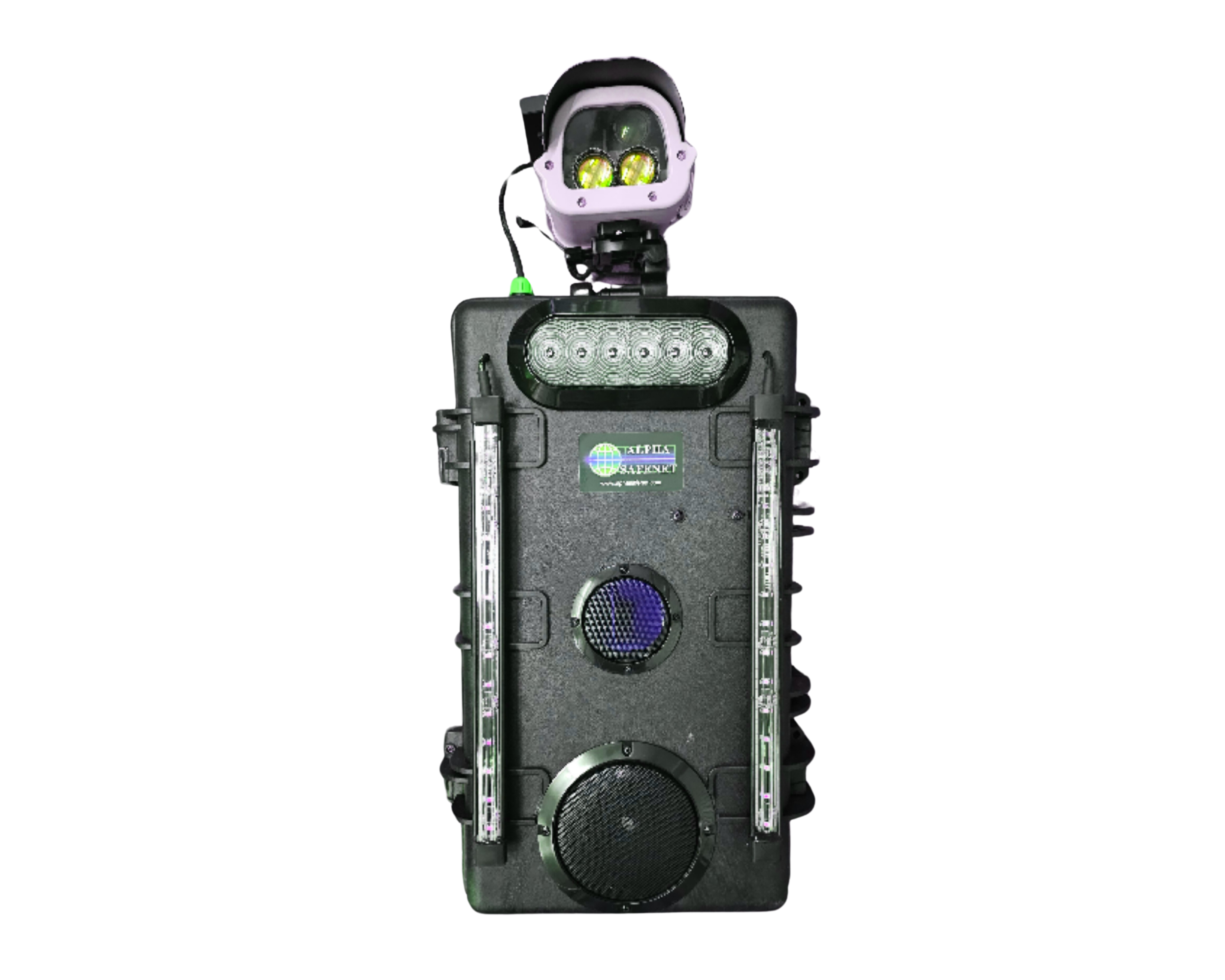
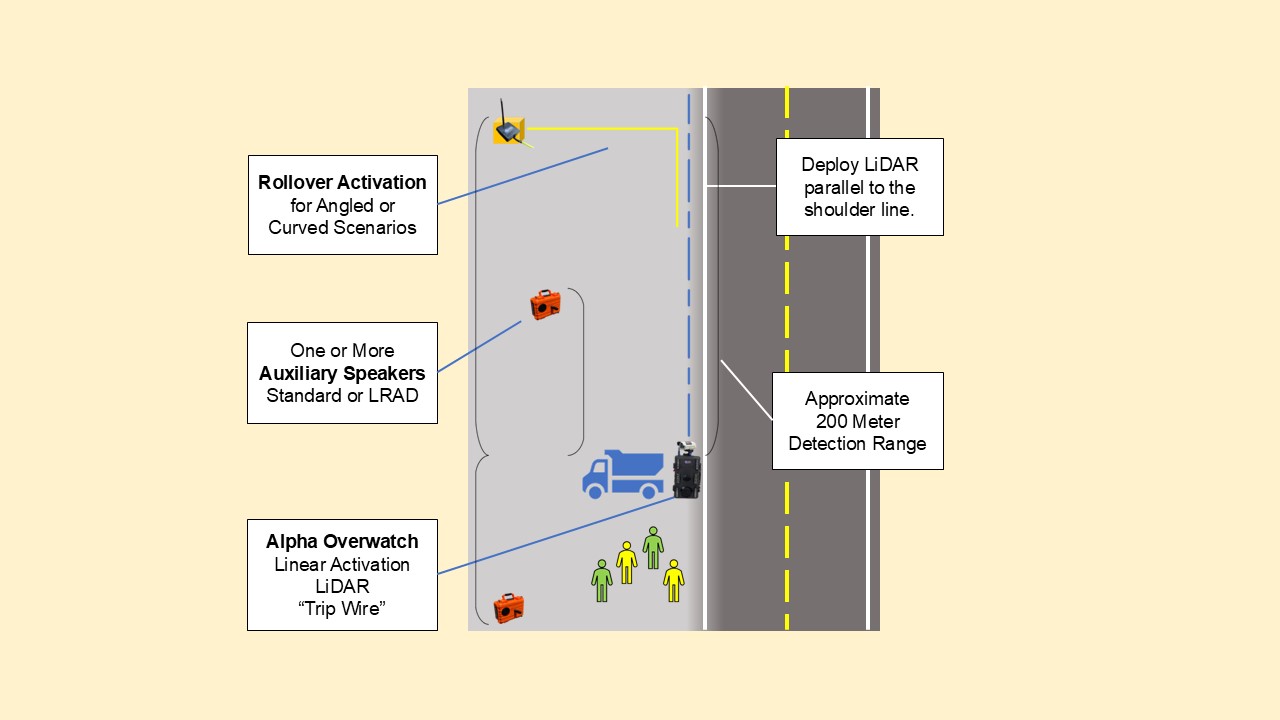
One person. One case. Under 3 minutes from the pavement to an armed, active LiDAR barrier. The Portable OVERWATCH is built for the crews that work alone — tow operators responding to single-vehicle incidents, utility workers handling emergency repairs, any scenario where you don't have the luxury of a second person or a slow setup.
Every design decision comes back to the same question: will this work at 2 AM, in the rain, when one person is managing a dangerous scene and doesn't have time for complexity? The answer is yes.
Protection that's always in position — because the best setup is no setup at all.
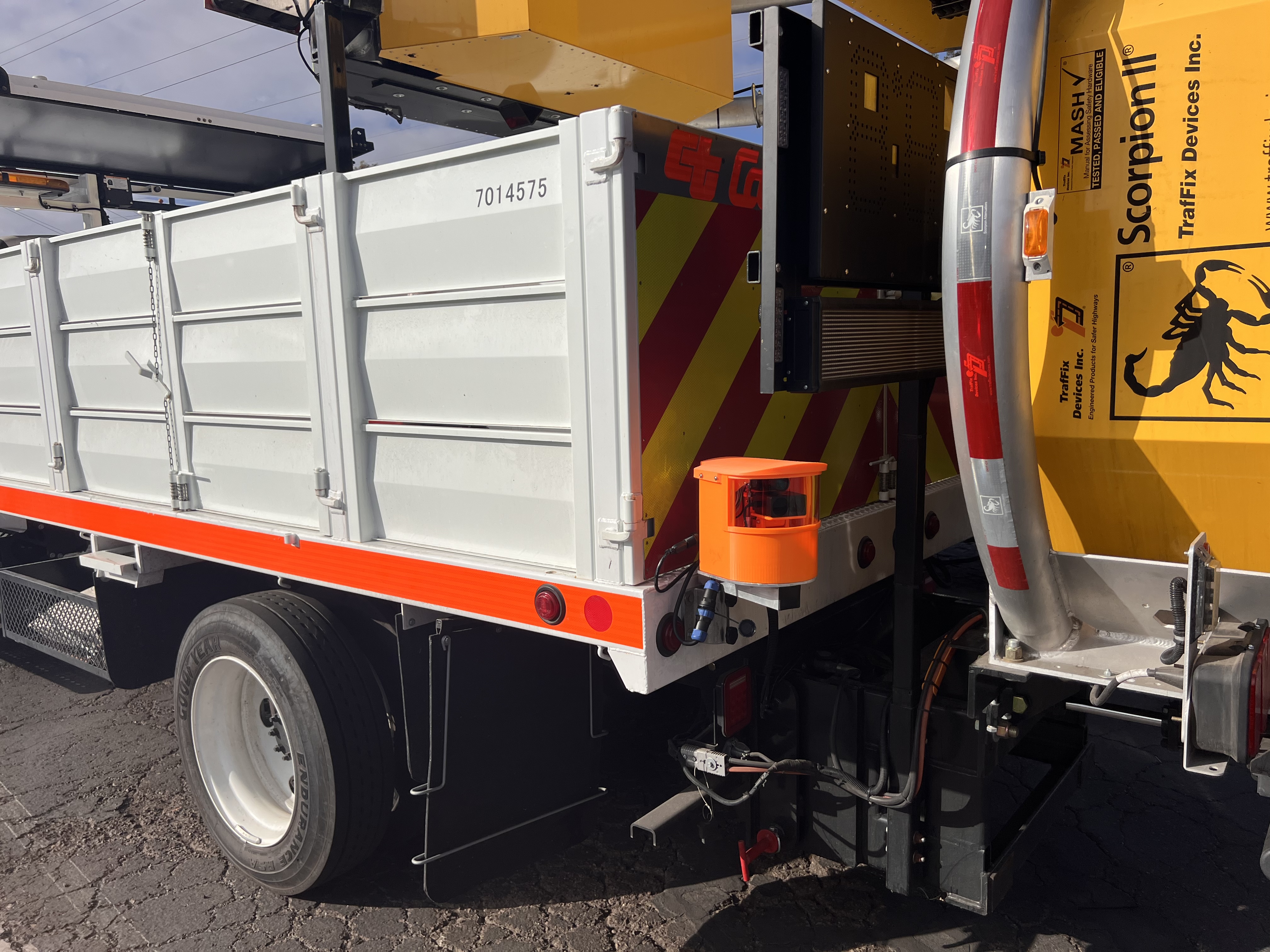
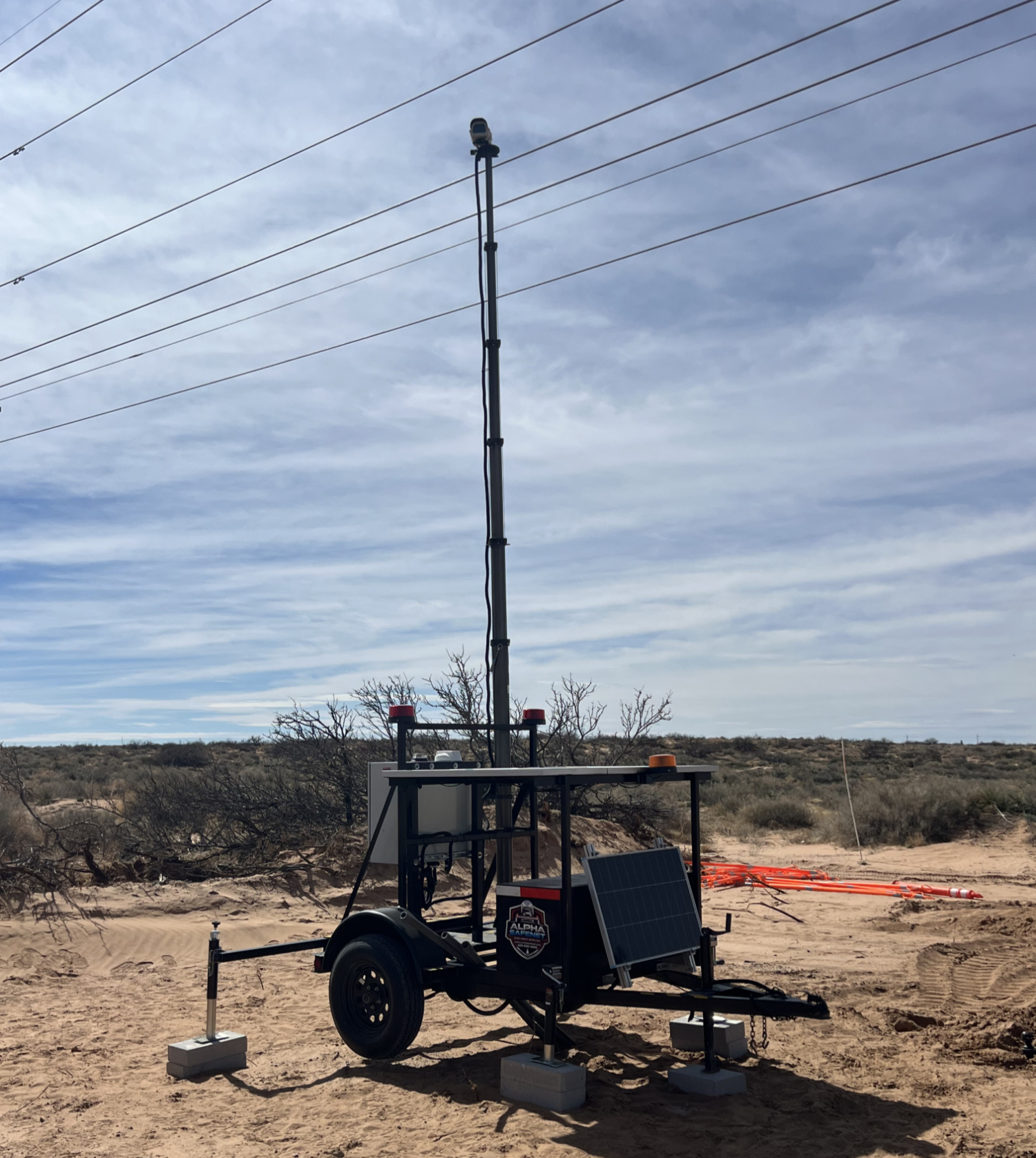
The Vehicle-Mounted OVERWATCH lives on your TMA truck, shadow vehicle, or highway patrol unit. Arm it from inside the cab. There is no deployment step, no case to carry, no alignment routine. Your driver arrives, presses arm, and the barrier is active.
For DOT fleet programs and agencies that deploy hundreds of vehicles per day, eliminating the setup step isn't a convenience — it's the difference between a crew that always deploys the system and one that sometimes skips it when things are moving fast.
When one barrier isn't enough — 360° coverage with no blind spots.
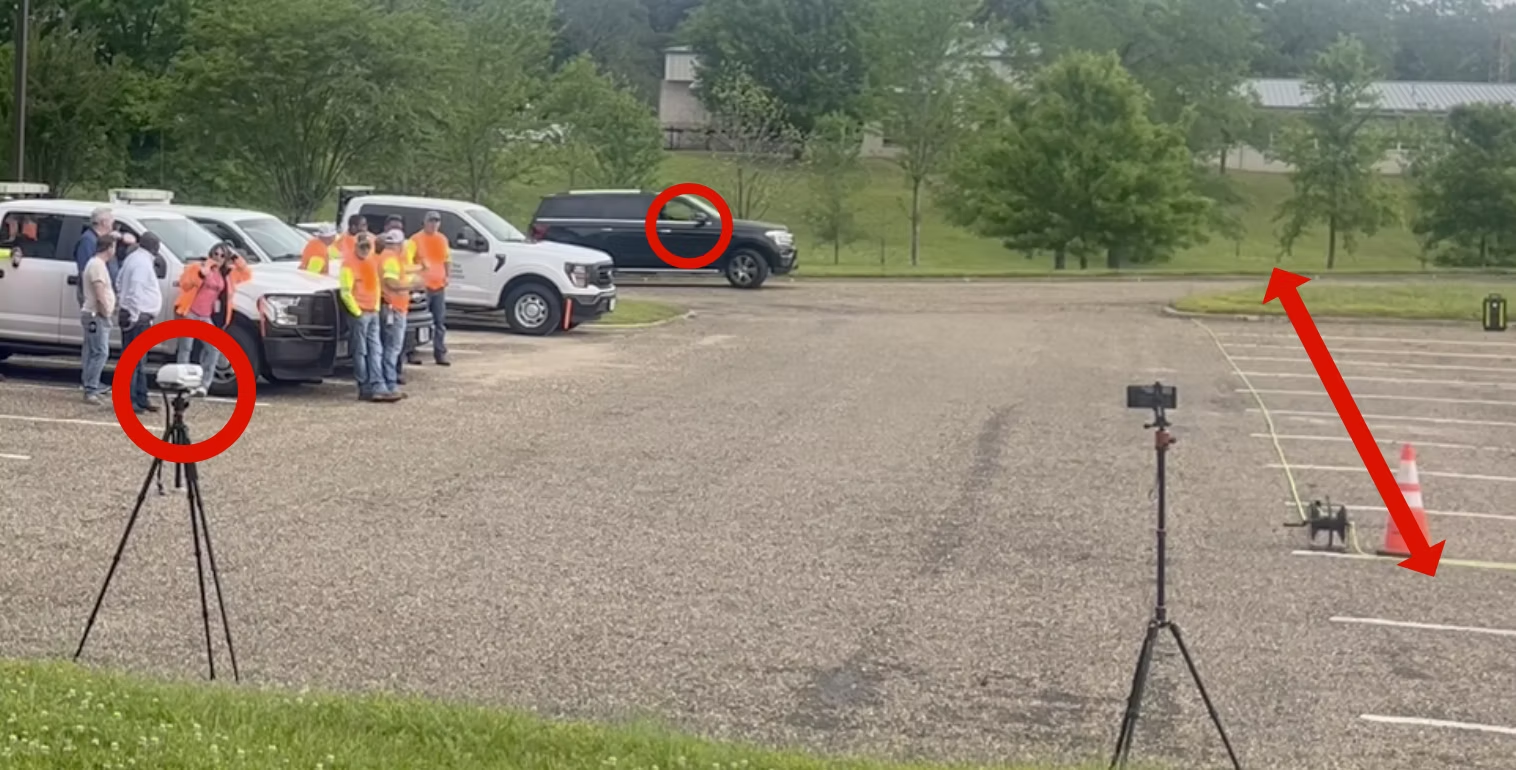
The Hybrid Solution deploys multiple synchronized OVERWATCH units to create a complete electronic perimeter. Every approach vector is monitored simultaneously. There is no angle from which a vehicle can enter undetected.
Built for complex utility sites, bridge deck repairs, and any critical infrastructure project where a single linear barrier leaves gaps. Full SCADA integration available.
Demo video • Request a live demo
The same protection that guards a full work zone — in a form factor that goes anywhere.
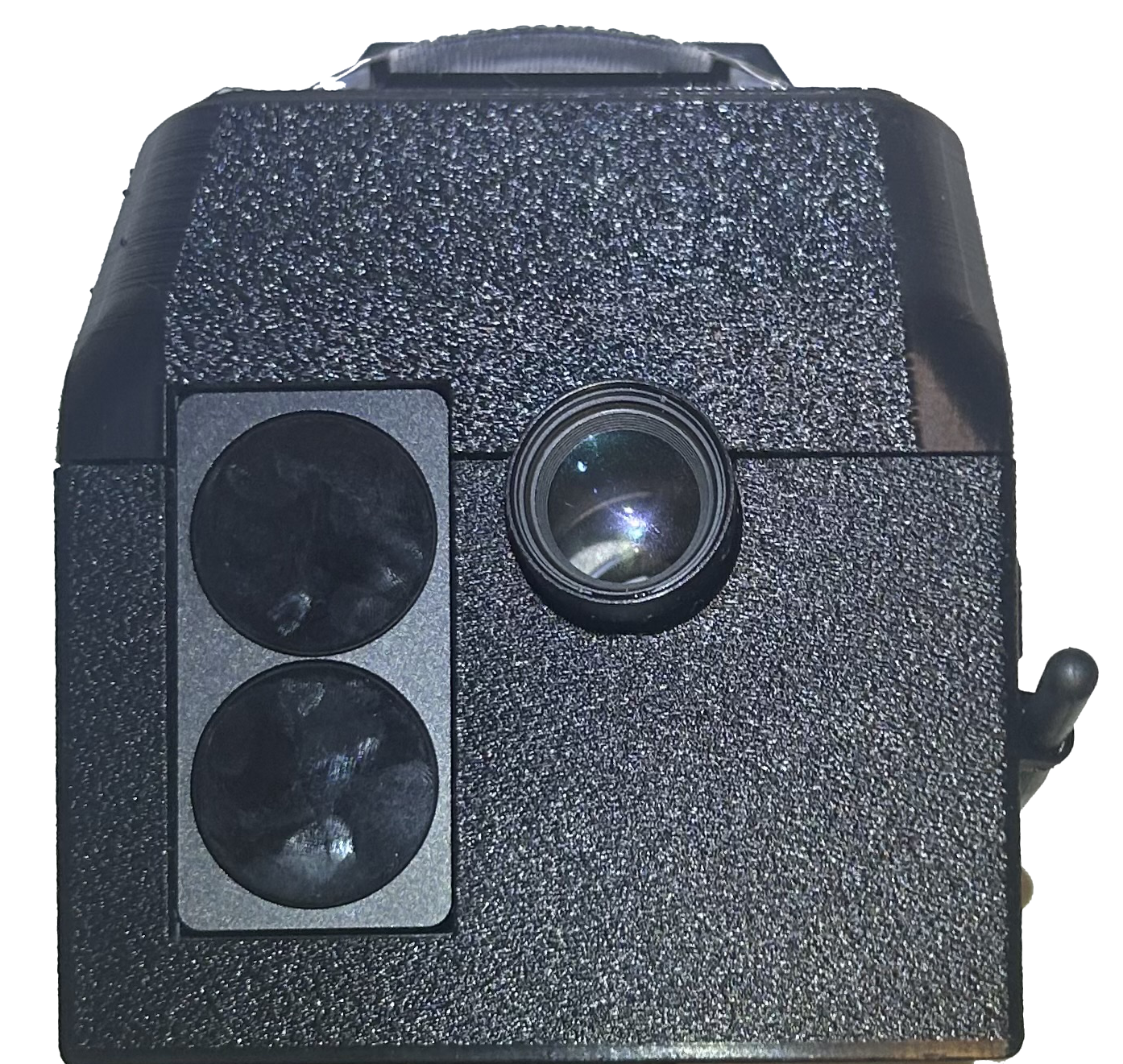
The OVERWATCH Mini brings the same patented LiDAR-based intrusion detection as the flagship OVERWATCH system in a compact, highly portable design built for scenarios where space and rapid deployment are non-negotiable. It detects vehicle-sized intrusions and fires the same 125 dB alarm — same response time, same reliability, smaller footprint. What sets the Mini apart is its built-in mesh networking capability: multiple Mini units link together to extend your detection zone across wider or more complex sites without additional wiring or configuration. Whether you're protecting a solo shoulder operation or scaling coverage across a multi-lane work zone, the OVERWATCH Mini delivers full OVERWATCH protection — right-sized for the mission.
Protect your vertical work zone from overhead hazards — before they become a catastrophe.
Protect your vertical work zones when potential hazards are above your work and crew. The Overheight alert system can be calibrated to detect overhead hazards ranging from high-powered tension lines, trees, cranes, scaffolding, and more.
These add-on modules integrate directly with any OVERWATCH configuration to extend capabilities for your specific scenario.
When the zone is on a curve — and drivers can't see your setup until they're already in it.
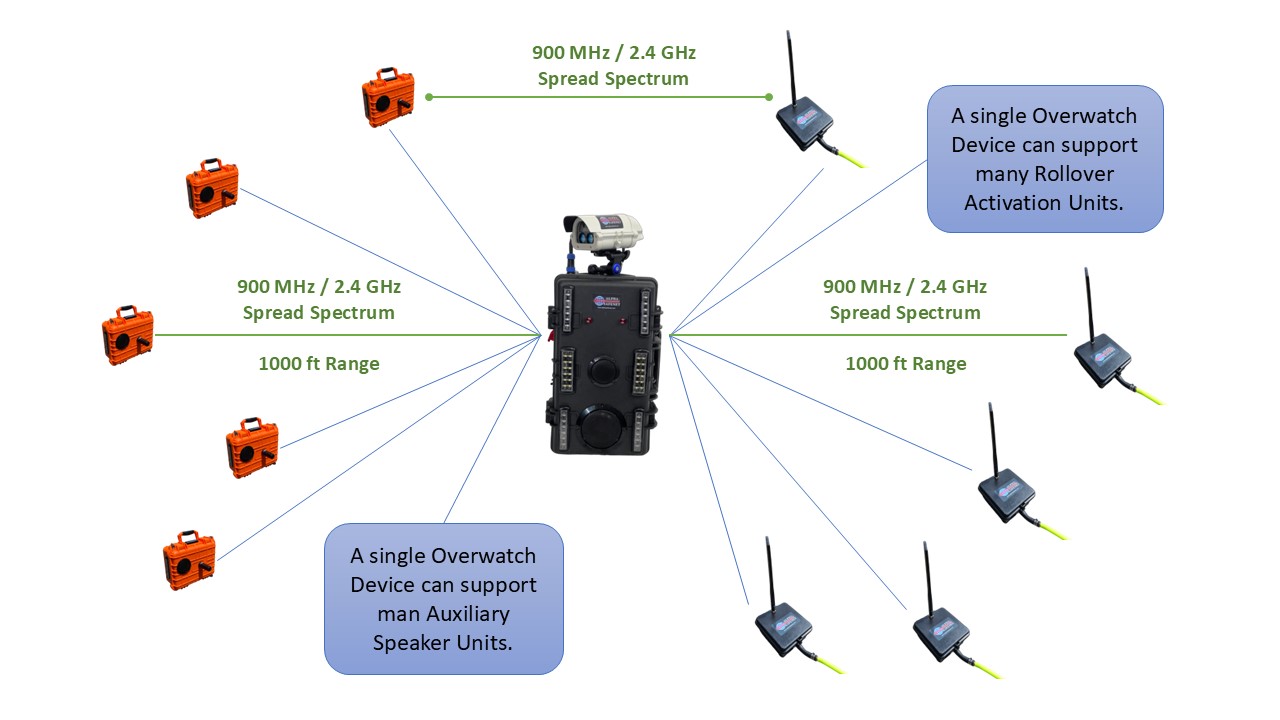
The Rollover Alert add-on deploys a wireless pneumatic tube upstream of your work zone — around the curve or over the crest — that fires a pre-warning alarm inside your zone when a vehicle triggers it. Your crew gets advance notice before the vehicle even reaches the OVERWATCH barrier.
Stop them at the ramp — before they become a ghost driver on the mainline.
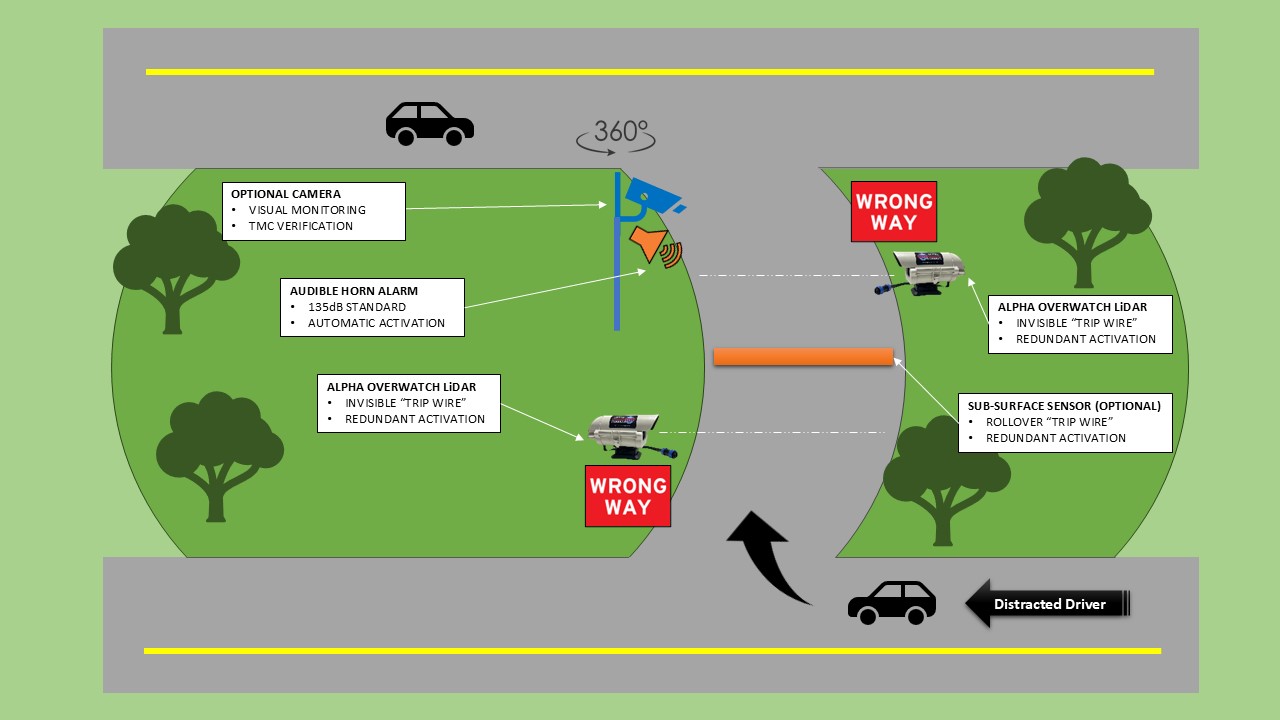
Positioned at highway on-ramps and one-way entry points, the Wrong-Way Detection configuration uses directional LiDAR to identify vehicles entering from the wrong direction — and fires the alert before they merge into oncoming traffic.
Trusted access without triggering the alarm — because your supervisors need to move freely.
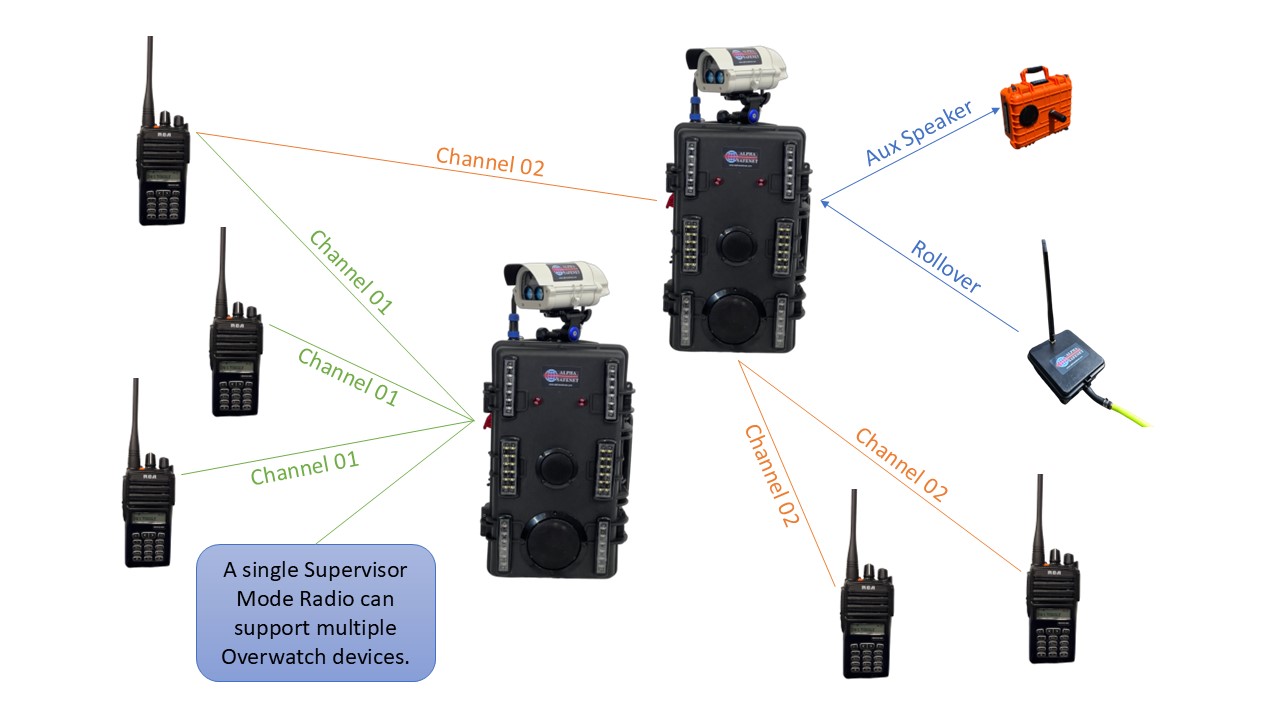
Understanding the practical needs of work zone management, the Supervisor Mode allows designated personnel to enter and exit work zones without triggering alarms. This feature integrates with existing VHF/UHF radio systems, eliminating the need for additional equipment purchases while enabling supervisors to monitor multiple sites efficiently.
Full manual control of audible warnings — from inside the cab.
Crews can maintain complete manual control over audible warnings from TMA cabins or shadow trucks, with configurable decibel levels to match specific safety requirements and environmental conditions.
Tell us about your crew size, your typical scenarios, and what keeps you up at night. He'll tell you exactly what you need — and show you it working.
Request a Demo